Saturday, June 6, 2009

Shirl Henke: MADE FOR EACH OTHER:

I never set out to write about Indians. Okay, Native Americans. But you see, when I began my career in historical romance back in the late Pleistocene, the name—or misname (blame Columbus for that one)—was Indian, or American Indian. I’d grown up reading Zane Grey, Luke Short, Edison Marshall and many more western writers. Not a big surprise that my first two novels were western romances, tales of Old California about horse breeders, gold miners and ranchers. I don’t do cowpokes, lonesome or otherwise.

But then this idea with a hero as an outsider came to me—a man disowned as unworthy by his father. The father (villain of the piece, of course) would force a young woman into marriage, intending for her to give him a pure-blooded heir. Now this could be anything from a Medieval to a Victorian. It could be set lots of places. But I’d just watched a PBS special on the High Plains Horse Indians (yes, they did have televisions back then). After some research, I decided my hero’s mother would be Northern Cheyenne and his cruel father would be a cattle baron. The lovely, unhappy young wife (who becomes a widow midway through the book) would fall in love with the half-breed hero.

The thought of a mystical bond between the lovers was not part of the equation. This was going to be a relationship-oriented love story about a man finding acceptance through the love of a woman who was brave enough to defy the bigotry of white society. But when I began to write the opening chapter, a peculiar thing happened (cue the eerie music…or maybe a slowly beating tom-tom). The hero came to me as a youth on his vision quest. When he saw the hawk swooping down from the sky to carry away a wolf cub, my seven-year-old heroine awakened a thousand miles away from a frightening nightmare. She had just shared his medicine dream.

I swear I am not making this up.

Well, okay, I’m a fiction writer. I did make it up. But I had never consciously considered it when I outlined the plot. Hawk and Carrie shared a bond that endured over miles and years until destiny brought them together, through the mystical power of his Cheyenne grandfather.

Since then I’ve written many romances with Cheyenne, Apache, Taino, Muskogee and Sioux characters. Some were heroes or heroines, others wise medicine men or women. Armchair shrinks could say I’m just using another manifestation of Jung’s “Old Wise Man Archetype. I won’t disagree. Like the idea of “the West” itself, this is a primal, powerful myth.
Through Native American mysticism a grand design created for special lovers completes the circle. Their lives are guided so that they fulfill their destiny by learning to understand each other even though they come from different worlds. Being part of this mystical universe allows them to understand themselves and how they are fated to live out their lives together. That is the bedrock of any good romance.

In my July release, Chosen Woman, I added another layer of conflict to the mystical elements. Fawn, my Cheyenne heroine, is the Chosen Woman who inherits her grandfather’s gift of prophesy. Her recurring visions while she is being educated back East involve a red prairie wolf that she comes to consider her totem, her protector. But when a cocky red-haired Irishman appears to guard her on her journey home to her people, she feels an irrational aversion to him. He, in fact, terrifies her. This arrogant white man could not be her protector…could he?

At first Jack believes Fawn is simply a spoiled brat, but after she saves his life by knocking him from his horse just before a bullet whizzes by his head, he gets a creepy feeling. Maybe there is some truth to what her white adoptive father told him about her ability to see the future. On the trip from St. Louis to Oklahoma Territory, Fawn realizes that she is developing greater control of her powers with Jack at her side. When evil men kidnap her, she projects her vision of them to him. Through her eyes, he sees them and the place where they hide. At story’s end, he understands and she accepts that he is her Red Wolf, her spirit guide and protector. Neither is complete without the other.

Call it a match made in heaven…or a design decreed by the Powers. Either way, it’s pure romance magic.

Tuesday, May 12, 2009

Deborah Grace Staley on the Angel Ridge Series

In 1995, my family and I purchased a fabulous circa. 1867 farmhouse on seven acres in the rolling hills of East Tennessee . On one side of the house, there's a breathtaking view of the mountains of North Carolina . On the other side you can see the backwaters of what is now Tellico Lake . The home has a unique "butterfly" design. That means that on either side of the front door, there are two wings--capped by two bay windows--that jut out, making a V shape around the trapezoid-shaped front porch.

Now, I am a lover of old homes. I have traveled extensively in the south and have toured more than I can name. I not only love the homes for their beauty and unique architectural elements, but also for the history surrounding them. So, naturally, when I moved into my own historic home, I immediately set out to research its roots. The more research I did, the more interesting facts I learned about the area surrounding the home.

The first settlers that came to this part of East Tennessee (present day Vonore, Greenback, and Maryville ) settled along the Little Tennessee River . They built their homes near the river, grew cotton and other crops. Some had received these parcels of land as Revolutionary War pensions. One notable person who purchased land in the area was the father of Sam Houston. In fact, the man who built my house, A.B. Howard, was Sam Houston's brother-in-law. Additionally, the gravesite of Sam Houston's mother and the Sam Houston Schoolhouse are only a few miles from my house.

The people who lived in this area were wealthy. They lived well. Their homes were not quaint frontier cabins, but rather elegantly appointed plantations. They had weeklong parties when the paddleboats came up to the docks to pick up shipments of crops. Their children went to private schools. They rode fast horses. They intermarried. They stood together against Indian attacks. They feuded. But it all ended.

The river on which the people built their homes frequently flooded making rich bottomland in which to grow crops. It also left wide spread destruction each time it flooded. The Tennessee Valley Authority was established by the federal government to deal with this flooding problem. The plan was to install a system of dams to control the levels of the water along the rivers in Tennessee and also to create lakes for recreational purposes. Creating the lakes required flooding large areas of land along the river. So, most of those fine plantation homes that once stood near my home are now inundated. Covered by what is now Tellico Lake .

At this point in my research, I went into "what if" mode. What if you had lived this type of lifestyle and suddenly had it taken from you? What if you had to move up into town and live with all the other people? How would that affect you? How would you mix with everyone else?

That is the basis for the Angel Ridge Series. The McKay's and the Jones's, they were some of those displaced people. They moved up into a town called Angel Ridge , which had formed on a high ridge above the river, safe from the flooding. A town with quaint Victorian homes, now spotted with elaborate Victorian mansions more suited to its new residents. The McKay's? They owned the bank, were lawyers, accountants, professional people. The Jones's? Well, they got their money the old-fashioned way. They married money. Unfortunately, they lost it to gaming and drinking.

Now the Jones home stands abandoned at the end of town, next to the McKay property, a shell of its former glory, decaying and damaged by fire. The Houston 's are known for doing their civic duty. There has been a Houston mayor in Angel Ridge for as long as anyone can remember.
It would be safe to say that the older generation is set in its ways. It would also be safe to say that the new generation of Angel Ridge residents is determined to make their mark on the town and bring it into the Twenty-First Century. People like Cole Craig, Josie Allen, Dixie and Blake Ferguson, Candi Heart, Sheriff Grady Wallace, and even the town's current mayor, Patrick Houston.

You'll notice that the names of the town residents are Scottish, English, or Irish surnames. These are all names that are found on old tombstones in the area near my home. Some are still found on mailboxes and street signs.

And my home? Well, at the turn of the century, it sported gingerbread trim that was taken down when a former owner decked it out in crisp, white vinyl siding back in the 80's. But that trim is still in the barn, and my husband and I plan to restore it and put it back up in the eaves of the house where it belongs. The predominant feature of the trim is the fleur de lis and angel's wings. Thus the town name, Angel Ridge . And if you haven't yet guessed, I live in Miss Estelee's House.

I look forward to chatting with you today. Who knows? Maybe even Dixie or Miss Estelee will show up, so tell all your friends to come over, sit a spell, and have a chat. We’ll even give out some prizes along the way!

Ya’ll take care now!
Deborah Grace Staley

Thursday, February 19, 2009

Darlene Gardner asks: How much does hearsay play into your perception of others?

I've been thinking about that question a lot this month with the release of my book The Hero's Sin, the first in a new series from Harlequin Superromance.

At the beginning of the book, Sara Brenneman witnesses Michael Donahue risk deadly whitewater to save a child from drowning. She thinks of him as a hero before she finds out that many people in town have another name for him: Murderer.

No matter what anyone says, she won't change her mind. She believes only what her heart tells her.

My editor tells me the kind of blind faith Sara displays is a hallmark of my books. Of my life too, I think. I once worked with a woman who was disliked by most of our co-workers. I heard story after negative story about her. Yet she was always perfectly lovely to me so I chose not to believe the gossip.

Naivety? Maybe. Many a woman has gotten burned for not believing friends who told her the guy she was in love with was a player.

What do you think? How can you tell when it's okay to listen to your heart?

Darlene Gardner

Thursday, February 5, 2009

Geri Krotow asks: What’s In a Title?

Looking at my latest release, What Family Means (Harlequin SuperRomance 2/09), I’m at once thrilled to again be published in book-length fiction, in awe of the cover art that depicts the perfect Buffalo, New York snowstorm, and amazed at the title. My working title for this story was “Remember Paris.” While Paris does play an integral part in the romance of my hero and heroine, it isn’t what the book is about. This story is about love against all odds, and just as important, family against all odds. So you see, What Family Means turns out to be the perfect title for this story.

Family means so many different things to all of us. Family of origin, extended family, birth family, adoptive family, step-family, blended family. Then of course the adage that you can choose your friends but not your family. I think of my closest friends as indeed a part of my family. But what really connects us all? What provides the cement, the glue that keeps people, related by birth or choice, together?

I dug deep to try to find at least one answer to this question—the answer that worked for Debra and Will in What Family Means. Debra is from a white, economically-challenged part of Buffalo. Will is African-American and his father a successful doctor. Debra and Will meet as children in the 1950’s, and fall in love with one another through the 1960’s and early 1970’s. I tried to be true to history and honor the struggles couples like Debra and Will faced. But I also honored what kept them together, allowed them to marry, have children, and thrive as a couple. Love.

It’s a thrill for me to blog here at NovelTalk. It’s always been my dream to be a published author and well, here I am—book number two already! I can’t thank all the wonderful folks who read my first book, and have asked “when’s the next one coming out?”

I’ll leave you with my gratitude, and something to mentally chew on. Happy St. Valentine’s Day in advance!

What’s your definition of family? What struggles have you been through to protect and nurture your love?

Saturday, January 31, 2009

Susan Vaughan: CONFESSIONS OF A TRIVIA JUNKIE

My name is Susan and I'm a trivia junkie. I love learning something new. A new word, an unusual little fact, a new process, no matter how obscure or weird. I've always enjoyed crossword puzzles, partly because of the new things I learn as I do them. And now as I get older--not that old yet but hey--crosswords keep my brain firing on most cylinders. Scrabble is fun, too, but more a search of the brain for words I already know. Here's an example of the trivia I have picked up from lord knows where. My neighbor was worrying about his father whose doctor had just told him something seemed to be going on with the older man's heart. My neighbor couldn't figure out the term the cardiologist used, couldn't figure out how to spell it to look it up. But once he said the word, I knew the spelling: i-s-c-h-e-m-i-a. Ischemia means coronary heart disease, or narrowing of the arteries. My neighbor was happy because now he could learn more on Web MD. See what I mean about trivia?

As a trivia junkie, I love acquiring new information as I research my books. I think it would be so difficult to write historical novels because of all the research involved, even the clothes and activities of daily life. But you'd be surprised how much research goes into contemporary novels as well. I found with my first book, Dangerous Attraction, I was looking for information constantly as I wrote the book. For my new release, Primal Obsession, I did a lot of direct research, personal research, with a canoe and camping trip. My husband and I took a six-day trip in the Maine wilderness with a guide and three other campers. I used the skills and experiences of the week to help me give authentic background and to plot the book. Later I had other research to do, either online, in books, or by calling people.

I did a blog post awhile ago on research being fun, but I saw one recently by another author who listed what she learned in the process of writing a book. I thought it would be fun to do the same. Here are ten things I learned while writing Primal Obsession.

1. In the state of Maine, the Maine Criminal Investigation Division handles murder cases. Only the cities of Bangor and Portland have homicide detectives. All other jurisdictions defer to the state.

2. Police often use cell phones instead of police radios because they can keep the calls more private. No one can listen in with their scanners at home.

3. There's never been a serial killer in the state of Maine. (Mine's the first!)

4. A serial killer's signature makes his crime stand out with his personal compulsion, which remains static and represents what he is. A signature is different from a modus operandi, which can change. I learned this from Mindhunter, by John Douglas, one of the founders of the FBI Investigative Support Unit.

5. The Cessna Caravan pontoon airplane can carry the pilot and eight passengers.

6. Maine Guides were first licenses in 1897. Guiding at first was primarily for hunters and fishermen but today Maine Guides are licensed for recreational guiding as well. That first year 1316 guides were licensed. The first licensed guide was a woman, Cornelia "Fly Rod" Crosby.

7. When navigating rapids in a canoe, watch for "funnels," rocks with water streaming before them. Head down the V's between the funnels/rocks.

8. Use a Radical Paddle--pull the paddle in to the canoe to make a quick turn--then power paddle through the V. The rear paddler sets the direction by switching sides and by pulling back in a J move.

9. When using a simple compass, place the red N arrow in the red section pointing north, or put "Fred in the shed," as our guide said.

10. When heading for a target spot in the woods, plot your course in short distances. Aim for a rock or tree ahead, then recheck the compass and choose a new target.

This isn't a picture of our guide but who cares. This is Sam from Primal Obsession. Watch for my book trailer, where you'll see Sam again.

Tuesday, January 27, 2009

Life can bring you some zany surprises, can't it? Two years ago, right after an unexpected death in the family, I was away from home, picking out a casket on my birthday because the next of kin were too devastated, when I got a call from Marsha Zinberg at Harlequin, asking me to be a part of the upcoming Harlequin NASCAR series.

Her request, while something I told her I was completely unsuited for, was the one bright spot in a very dark day. I didn't tell her what was going on in my life right then, but when she urged me to consider the request and offered to send me more information, I reached for that ray of sunshine and said okay.

Even though, as I'd told her, "Not only do I know nothing about NASCAR, Marsha, it looks like a really dumb sport, cars just driving around in a circle."

Famous last words.

Fast forward a few weeks. I'm back at home, we're all trying to settle back into real life. I get the information and start researching. I find Nascar.com. Discover the Speed channel. Start filling up my DVR with pre-race shows—Trackside Live, coverage of qualifying, of practices, even wading my way through episodes of Performance, where crew chiefs talk about the innards of the cars (my mechanic granddaddy would have been so proud of me!!!) I pore through NASCAR for Dummies. Start absorbing terms like camber and tight and loose and downforce. I watch my first race (Bristol spring race, if anyone's interested.)

And get hooked on the continuing drama that is NASCAR—feuds and friendships, folks to cheer, others to boo, something new each and every week. At last, I understand just how complex the sport is, how much strategy plays a part, right along with skill and cunning and Lady Luck.
And then, I attend my first race, the Bristol night race—called the hottest ticket in NASCAR. And have to inform my indulgent honey, who is endlessly amused at this new fascination (okay, obsession) of mine, "Um...you know how I said all this was just research for a book? Hate to break it to you, darlin', but...I'm pretty sure I'm still going to be following racing even after I finish writing."

Of course, during all this, I have friends and family who think I've lost my mind. Who can't imagine anyone less likely to be a fan and think I'll outgrow it. I also discovered—in all sorts of unexpected places—interesting people who just happen to be race fans. (One in four Americans is a NASCAR fan, and nearly half of those are women, just so you know.)

So here I am, one Christmas novella and one 2008 book later, now unveiling the first of two books in the 2009 series, with two more stories coming in 2010...who knew?!?! The three series all have connected stories and a continuing cast of characters. Black Flag, White Lies, my February release, is about Will Branch, one of the twin driver sons of Maeve Branch, heroine of Extreme Caution, my December 2008 release. And in 2010, I'll be doing the story of Will's twin Bart.

But for those of you who, like I did, think you don't give a hoot about NASCAR, well, hey, that's your choice, for sure. You might turn out, like me, to need to eat a little crow, should you decide to check into it—or you might not. Regardless, rest assured that these book are, first and foremost, romances, so even if you're not a race fan, you'll find the same qualities in these books as my others—powerful emotion and complex characters I hope you'll root for to find love in the end.

And for those of you who were NASCAR fans long before me, well, what can I say? I came late to the party—

But I'm here to stay!
Jean
Visit Jean's website!

Saturday, January 24, 2009

John Wayne, John Belushi, and Me - Barbara Bretton

For years I avoided watching The Quiet Man. WPIX played it every St Paddy's Day and by the time Sean Thornton showed up in Innisfree, I was usually heading for the kitchen to clean the oven or do something equally entertaining. I hated John Wayne back then. I hated his movies. I thought he was a lumbering, strange-looking, no-talent actor and that The Quiet Man perfectly showcased all of those qualities.


And then on St. Patrick's Day 1980 I fell in love. I don't know if I'd opened my mind to the movie or to the man, but suddenly The Quiet Man became one of my all-time favorites. I loved the theme, the scenery, the wonderful faces of those character actors in the supporting cast, but mostly I loved John Wayne and Maureen O'Hara. I loved seeing strength pitted against strength. I loved the way she gave as good as she got in every situation and hung onto the things she believed defined her as a woman and as a wife. I loved (and still love) the scene in the doorway of the rose-covered cottage with the storm outside and within, the wind tangling both her hair and her emotions. She pulls away from John Wayne but he doesn't let go of her wrist. I see them, caught almost in a dance move of exquisite tension and possibilities, There is between them love and respect and desire that went deeper than reason. It's a lusty, bawdy, funny and touching movie and I almost missed it.

What was it about The Quiet Man that revealed itself to me that day that had eluded me all the times that had come before? You see, I have a theory about how certain movies turn into beloved gotta-buy-the-DVD favorites and it has to do with timing. It's a lot like love at first sight. On another day you might very well have turned away from the love of your life and wandered aimlessly and alone across the romantic horizon for the rest of your life. Same way with movies. (And with books, for that matter.) You need a serendipitous blend of mood and atmosphere and magic to turn an okay movie into one of your personal never-fail favorites.

Don't laugh, but that's how Animal House ended up near the top of my Can't Miss List of Favorites. I was in a rotten PMS mood the night The Husband and I went off to see Animal House during the summer of 1978. And to make it worse, I was retaining water. You could've used me as a buoy in the Great South Bay. After supper (which I skipped in favor of mass quantities of chocolate brownies) The Husband suggested we take in a movie. Animal House was playing at the theatre next to the bowling alley. I said I'd rather be strapped to my seat and forced to watch a Clint Eastwood Festival than go see Animal House but it was a miserably hot and humid night and the thought of air conditioning finally lured me out the door.

So there I was thirty minutes later, slumped down in my seat, determined to hate the movie with every fiber of my being. But to my surprise I didn't hate it. I loved it. I laughed until I cried. I loved Flounder and Bluto and Otter and Boone and Katie and every other idiotic character. I fell out of my seat when they trashed the new applicants to Delta. "Toga! Toga! Toga!" became my mantra. If Belushi had arched his brow in my direction that night I might have run away with him.

I've often thought that the manuscript buying process in publishing is a whole lot like Delta's screening process for pledges. Flash a manuscript page on a screen and watch overworked, underpaid editors throw crushed beer cans in its general direction. First editor to score a direct hit with a crushed can of Coors gets to make the live-or-die pass-or-buy decision.

You have no idea how much I love that image.

Fat, drunk, and stupid is no way to go through life, son.
--Dean Wormer, Animal House

Tuesday, January 13, 2009

Donnell Ann Bell: Just be professional... It's not that hard

A couple of years ago, I had the opportunity to participate in my local sheriff's office citizens' academy. After sitting through six weeks of law enforcement demonstration and opinion, I believe the experience brought realism to my writing. Out of all the personnel I met during this time, there was one sergeant who impressed me above anyone else. Her words still resonate with me to this day.

Just be professional, it's not that hard.

Sadly, I can't remember her name, but I took note of her words. She was a beautiful Hispanic woman and when she stood before the class and explained that she worked in the jail -- unarmed -- among male inmates, I thought, Holy cow, this lady won't live long. Silly me. She'd worked among them for years. What's more, she was required to turn her back on this criminal element -- often.

For anyone who's been in a jail, you know there's intense security and surveillance, and the deputies can call upon immediate assistance. But knowing this didn't make me feel better. I kept thinking she could be injured or dead before help could arrive.

Turns out she hadn't made sergeant for nothing and understood the risks. What's more, she carried herself with amazing grace and an even more amazing sense of who she was. She didn't look tough on the outside, but as she called one six-foot naysayer to the front and brought him down with such ease, she filled me with a whole new appreciation and respect for who she was and what she did for a living.

After she dropped my classmate to his knees, she modestly helped him up and shook his hand. Then she turned to the class and said, "Just be professional, it's not that hard."

She also went on to explain that as a Hispanic female charged with watching over incarcerated inmates, it oftentimes presented problems. Particularly, when many of those inmates were Hispanic and grew up in households in which men did not take orders from women. So not only did the sergeant face an authority issue, she encountered a cultural barrier.
How did she handle it? By treating everyone with respect. "Those men don't know me," she said. "Their slurs and insults can't reach me. When my shift ends I go home to my family whose opinions do count."

So why do I tell you this story? Because today I'm seeing exactly what she talked about -- a reduction in professionalism. Worse, we are not inmates. I'm seeing dry wit replaced by so-called snarkiness (I have another term for it). What's more, this type of behavior is applauded. In an on-line society, where we are faceless individuals behind a computer screen, it's so easy to react and push send and forget there's a real live, flesh and blood human being on the other side.

I recently listened to a radio ad in which two actors portrayed school-aged girls, one of whom said the most horrible things to her peer. I sat back stunned, thinking what on earth? Then at the end of the message, the voice over said, "You wouldn't say it to their face, why would you say it on line?"

I don't know about you, but for anyone to even feel the need to air such a public service announcement made me incredibly sad. As for me, I think I'll follow the sergeant's example. I'll take her words to heart. I’ll strive for professionalism. I learned from the very best that it's not that hard.

Thursday, January 8, 2009

Natalie Dunbar: Musings From An Edited Author

When a reader purchases an author's book, the credit or the blame for the quality of the reading experience usually goes to the author, whose name is on the book. Many readers do not understand that prior to the book getting on the shelf it goes through an editing process that the author usually participates in, but often has less than optimal control. As a multi-published author I have been edited many times. Sometimes the experience has been gratifying such as when an editor has shown me ways to make the work better as in ways of tightening a plot or character focus, removing or changing words I use too often, suggesting more effective words in some areas of the work, suggesting additional scenes to heighten the focus or impact.... The list can go on.

The relationship can be difficult, such as when you find yourself trying to reach a lofty goal of perfection that only the editor knows when it has been obtained, or when large portions of the work are summarily deleted to save paper or meet a specific word count, leaving a short and Spartan echo of the original, or new errors are somehow introduced in the editing process, or your editor is a repressed writer who really wants to write your book. In the non vanity publishing houses an editor makes the decision to buy an author's work and once it is purchased, that editor works with the author to make it the best it can be.

The relationship between an editor and the author of the work is really a partnership and when it is good, an author can flourish and grow, and when it is bad, it can stifle author creativity and turn away readers. What can an author do? Making sure that author approval is required for the final manuscript version by contract helps, but nobody introduces mistakes to a manuscript on purpose and I've seen and heard of this instance and previous manuscript versions ending up on the bookshelves in error. It should also be noted that when you are a new author you generally have little power to dictate what happens to your book. If you want your work to be published and you don't want to be self published, you don't usually get to choose your editor. They choose you by making the decision to buy your book.


This blog is not intended to bash editors. They're just doing their job. I've had some very good ones and some not so good ones. As the occasional recipient of sometimes pointy fan criticism for books with errors, books that were too short, or elements that were too much, I wanted to say that a writer can keep their work as it is for their personal use and enjoyment, but if they want to sell it and have it published, the work will most likely be edited and changed in some way, hopefully for the better and hopefully with author agreement.

What are your thoughts on the editing process? Have you been burned? Or is your editor a dream to work with?


Natalie Dunbar

Vegas Bites Three of A Kind, Parker Publishing

Tuesday, January 6, 2009

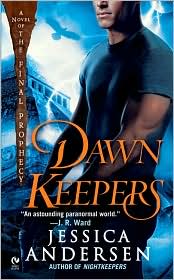
Jessica Andersen: OF MAYA MYTHS AND HOT MEN

As I talk to people about Dawnkeepers, one question that comes up repeatedly is one of inspiration, and how I came to take pieces of ancient Mayan mythology and bring them into a modern day paranormal romantic thriller. Given that I'm a scientist by training and have spent the last bunch of years writing medical romantic suspense, it might seem a little off-topic
for me to be writing about Maya mythology. But really it isn't. . . it goes back to being a little kid and visiting a big pyramid. This was back when Cancun was just starting to become Americanized. My parents and I stayed at small local hotels and took rattling bus tours to Mayan ruins across the Yucatan.

Ever since, I've been fascinated with the Maya. I can still close my eyes and feel the damp chill of the narrow stone stairway inside the great pyramid at Chichen Itza, or remember the squirrelly quiver at the pit of my stomach as I stood at the edge of the Cenote Sacrada. It's those images, those memories of history and grandeur and a deep sense of otherness, that came back to me, grabbed me by the throat and dragged me along for the ride then I stumbled over a reference to the endpoint of the ancient Mayan calendar, and how it aligns with scientific concerns about a stellar conjunction set to occur on that very day. . . December 21, 2012.

I mean, how cool is that?

So I started working on the concept for the Novels of the Final Prophecy. But the stories that I love to read and write aren't about a place, or a situation. . . they're about the people in those places and situations. In
Dawnkeepers, ex-lovers Nate and Alexis are forced to work together to recover seven lost Maya artifacts that are critical to the end-time war. In the process, they're forced to deal with their pasts and each other, and things heat up fast! But really, it all goes back to a rattling bus tour and a guide who'd never seen snow before (that really blew my kidlet brain).

. . and a bit of inspiration.

So tell me… what inspires you?

Jessica Andersen

Saturday, January 3, 2009

Linda O. Johnston's Obsessions 2009!

This is the time of year we usually are obsessed with our New Year's resolutions. Did we make any? Can we keep them? If so, how long--all year?
My resolutions are combined with my obsessions, as usual. What obsessions are those? Well, I'm obsessed by writing, and I'm obsessed with animals--most especially my adorable two dogs, Lexie and Mystie, both Cavalier King Charles Spaniels.

I combine the two obsessions by writing as much as possible about animals. In fact, my three (or possibly four) books to be published this year, as well as my e-novella, all feature animals.

They all star some very interesting characters, too, who are all animal lovers. Some of them are animals as well as humans--shapeshifters. My characters tend to be very diverse. Part of the fun of the writing process is to take people and put them into different situations and see what they do. Do you think writers control their characters? Not always...

My first book this year, available now, is Alpha Wolf, a Silhouette Nocturne. My first Nocturne, in fact. It's about Alpha Force, a new super-secret military force I've created that will appear in other stories as well. Many of its members are shapeshifters.

In Alpha Wolf, the hero is a werewolf who's helped to develop an elixir that allows Alpha Force members to shapeshift at will, and also enhances their human cognitive abilities while in shifted form. The heroine is a veterinarian who helps him--while not, at first, believing werewolves exist. Conflict? Sure! It's a fun, romantic, dark and sexy story.

Also available in January is my Nocturne Bites Claws of the Lynx. It's an e-novella, and its heroine is a member of Alpha Force who shapeshifts into--what else?-- a lynx. Her mission is to retrieve something stolen by a shady journalist... and the guy assigned to help her is her lost love who couldn't accept that she is a shapeshifter. Conflict again!

With less (although some!) romantic conflict but more mystery is my next Kendra Ballantyne, Pet-Sitter mystery, Never Say Sty, an April release from Berkley Prime Crime. It involves potbellied pigs, dogs, and other kinds of animals, including some who participate in a TV reality show. There's a murder, of course. Kendra, to her chagrin, is a murder magnet. And her romantic interest also loves animals.

My next Silhouette Nocturne, Back to Life, will be a June 2009 release. It's not an Alpha Force story. Instead, the heroine has Valkyrie powers over life and death. She can bring back the dying in some circumstances... and those circumstances include saving the hero's life when he's closer to death than anyone else she has ever saved. Uh-oh. No animals here? Hah! My heroine is also a K-9 cop! And, yes, as a Nocturne, this is another dark but fun paranormal romance.

I'm also working on another Alpha Force sequel that will be published in late 2009 or early 2010. The hero's a werewolf whose cover is being a sled dog musher in Alaska, and the heroine is a nature writer.

Okay, as I said, my obsessions intertwine. They're also involved with my New Year's resolutions.

What are those resolutions? Write, write and write some more! And get organized. I expect to fulfill the first one. The second is more problematic, and I'll only take the time for it that won't eat into my ability to take excellent care of my pups, and to write, write and write. Oh, and yes, I'm still a lawyer, between jobs and projects right now, but I also hope to change that sometime soon.

Please come visit me anytime at my website. I also blog weekly at KillerHobbies.blogspot.com And what do I mostly blog about there? Pets (although I consider them family more than hobbies)! I'd love to hear about your New Year's resolutions and obsessions, and if they're in any way connected.

And have a wonderful, prosperous, healthy--and obsessive--New Year!

Linda O.